Velnacor Research Desk
Research Library
Original educational notes on peptide science, analytical methods, laboratory handling, and responsible research-material sourcing.
Browse topic archives
 Lab Standards
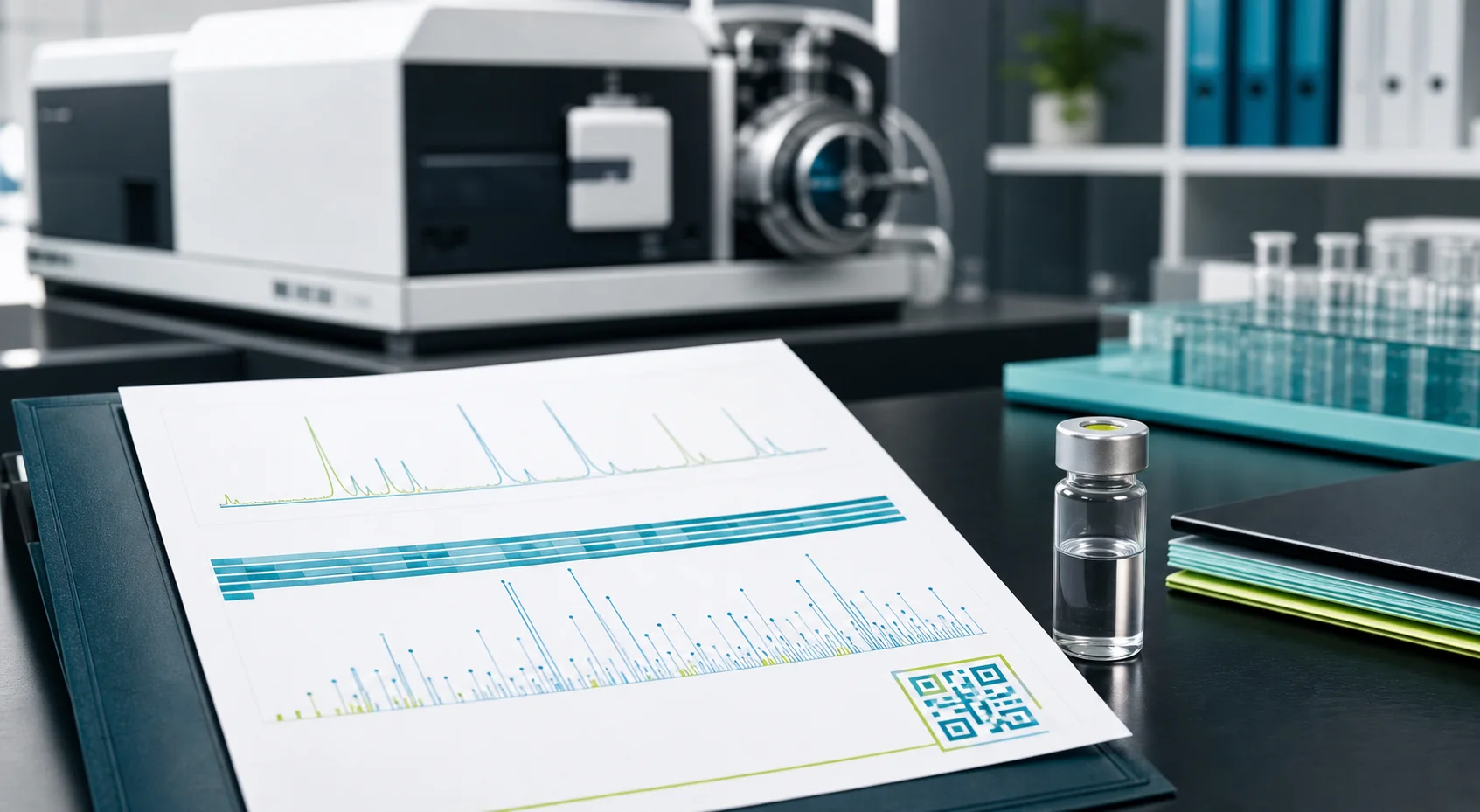
Lot Traceability: Connecting Manufacturing Records to the Laboratory Sample
A research-use guide to lot traceability for peptides: how identifiers, test reports, packaging, and the sample at the bench should tell one consistent story.
Read research note →Lab StandardsThird-Party Peptide Testing: Independence, Methods, and Lot Matching
How to evaluate third-party peptide testing: independence, method scope, sample-to-lot matching, and what a generic or undated report does not prove.
Read research note →Lab StandardsCold-Chain Records for Lyophilized Research Peptides
A research-use note on cold-chain and transit records for lyophilized peptides: what to specify on a brief, what to check on arrival, and what those records do not prove.
Read research note →Lab StandardsHow to Read a Peptide COA: A B2B Buyer's Checklist
Learn how to read a peptide COA: verify the laboratory report, match the lot, separate purity from quantity and resolve gaps before B2B procurement.
Read research note → Learn
HPLC vs Mass Spectrometry for Peptide Lot Review
HPLC and mass spectrometry answer different questions in peptide lot review: relative purity versus molecular identity. Neither result replaces the other.
Read research note → Peptides
What Is PT-141? Cyclic Melanocortin-Receptor Agonist Identity and Documentation
A research-use identity note on PT-141 (bremelanotide): cyclic melanocortin-receptor agonist design, attributed published findings, and lot documentation.
Read research note →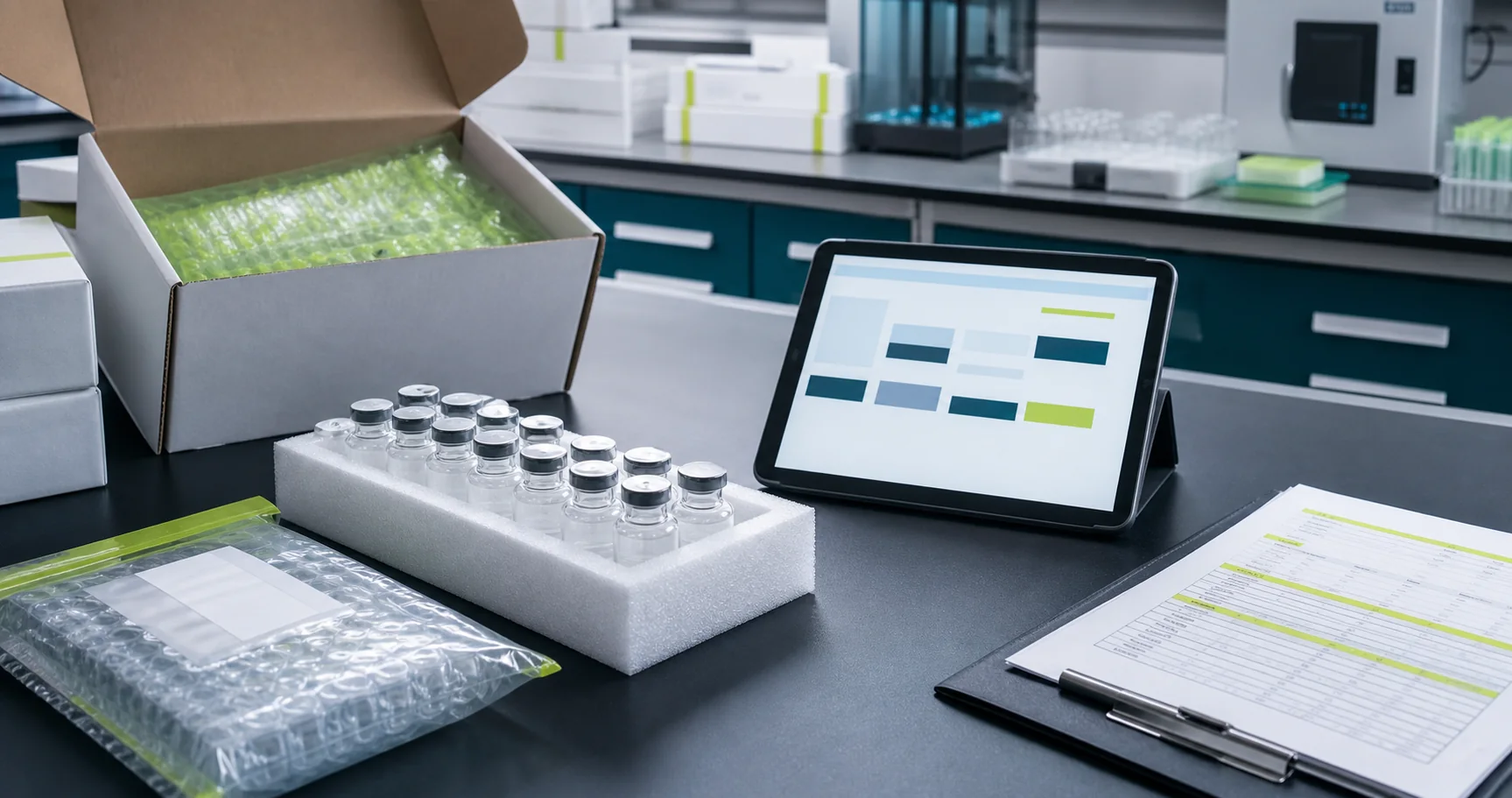 Industry
Evaluating US Research-Peptide Suppliers: A 2026 Framework
A research-use framework for evaluating US peptide suppliers in 2026: documentation, traceability, policies, and research-only positioning — not a ranking list.
Read research note →PeptidesWhat Is Semax? ACTH(4-10) Analogue Identity and Laboratory Documentation
A research-use identity note on Semax, the ACTH(4-10) analogue Met-Glu-His-Phe-Pro-Gly-Pro, with attributed rodent neuroscience findings and lot documentation.
Read research note →PeptidesWhat Is NAD+? Identity, Catalog Form, and Laboratory Documentation
A research-use introduction to NAD+ as a laboratory material — a coenzyme, not a peptide — covering identity, catalog form, and the documents that should accompany a lot.
Read research note →PeptidesTirzepatide: Dual GIP/GLP-1 Agonist Identity and Laboratory Documentation
A research-use identity note on tirzepatide as a dual GIP/GLP-1 agonist, with attributed published findings and lot-documentation notes.
Read research note →PeptidesWhat Is Tesamorelin? GHRH-Analogue Identity and Laboratory Documentation
A research-use identity note on tesamorelin as a GHRH analogue, with attributed published findings and a documentation flag on unverified N-terminal chemistry.
Read research note →PeptidesGlutathione in Laboratory Research: Structure, Redox Forms, and Documented Applications
A research-use note on glutathione as γ-glutamyl-cysteinyl-glycine: GSH versus GSSG terminology, redox models in published literature, and lot documentation.
Read research note →Lab StandardsWhat Is a Peptide COA? Scope, Limits, and Lot Matching
A research-use definition of a peptide COA: what the document should identify, which questions it can answer, and what a generic report does not prove.
Read research note →PeptidesWhat Is BPC-157? Sequence, Literature Scope, and Material Quality
A research-use introduction to BPC-157: the named 15-amino-acid sequence, the limits of preclinical literature, and the lot records that should accompany laboratory material.
Read research note →PeptidesWhat Is TB-500? Identity and Documentation for Laboratory Research
A research-use identity note on TB-500: how the name is used in catalogs and literature, why it should not be conflated with BPC-157, and which lot documents to file.
Read research note →IndustryHow to Evaluate a Peptide Supplier: B2B Checklist
A B2B checklist for comparing research-peptide suppliers, covering specifications, lot-matched analytical reports, complete quotations, and trial-order acceptance criteria.
Read research note →PeptidesWhat Is CJC-1295? DAC versus No-DAC Identity and Documentation
A research-use identity note on CJC-1295: why DAC and no-DAC forms must be labeled separately, with attributed findings from the primary analogue papers.
Read research note →PeptidesWhat Is Retatrutide? Triple-Receptor Agonist Identity and Laboratory Documentation
A research-use identity note on retatrutide as a triple glucagon/GIP/GLP-1 agonist, with attributed published findings and lot documentation.
Read research note →PeptidesWhat Is GHK-Cu? Identity, Copper Complex, and Laboratory Documentation
A research-use introduction to GHK-Cu: the copper(II) complex of GHK, how it differs from the peptide alone, and which lot documents should accompany laboratory work.
Read research note →PeptidesBPC-157 vs TB-500: Different Sequences, Separate Lot Files
A research-use comparison of BPC-157 and TB-500 as distinct catalog materials: different sequences, separate literature, and why each lot needs its own documents.
Read research note →PeptidesSermorelin vs Ipamorelin vs Tesamorelin: Receptor Class and Separate Lot Files
A research-use comparison of sermorelin, ipamorelin, and tesamorelin: GHRH versus GHSR classes, attributed findings, and separate lot files—not a ranking.
Read research note →PeptidesSemaglutide: GLP-1-Analogue Identity, Sequence Modifications, and Laboratory Documentation
A research-use identity note on semaglutide: GLP-1-analogue modifications, attributed published findings, and lot documentation.
Read research note →PeptidesRetatrutide vs Tirzepatide: Receptor Class and Separate Lot Files
A research-use comparison of retatrutide and tirzepatide: triple versus dual receptor designs, attributed findings, and separate lot files—not a ranking.
Read research note →PeptidesWhat Is MOTS-c? Identity and Documentation for Laboratory Research
A research-use introduction to MOTS-c as a defined laboratory material: identity, documentation, and how to keep published models separate from the lot on the bench.
Read research note →PeptidesWhat Is Ipamorelin? Identity, Receptor Selectivity, and Laboratory Documentation
A research-use identity note on ipamorelin: GHSR selectivity in published models, time-course design, and the lot documents that should accompany laboratory material.
Read research note →PeptidesWhat Is 5-Amino-1MQ? NNMT Inhibition and Laboratory Documentation
A research-use note on 5-Amino-1MQ, a small-molecule NNMT inhibitor: attributed cell- and mouse-model findings, and why it is not documented as a peptide lot.
Read research note →PeptidesBPC-157 in Preclinical Literature: Evidence Limits and Material Quality
A research-use review of how to read BPC-157 preclinical literature, why study models are not interchangeable, and which lot documents should accompany a laboratory material.
Read research note →PeptidesWhat Is PP405? Named Research Code and Documentation Limits
A research-use note on PP405 as a named research code, flagging that a structure-disclosing peer-reviewed identity paper was not verified.
Read research note →PeptidesWhat Is Tesofensine? Monoamine-Reuptake Identity and Laboratory Documentation
A research-use identity note on tesofensine as a monoamine-reuptake inhibitor, with attributed phase II body-weight findings transcribed as reported, not as a regimen.
Read research note →PeptidesWhat Is SLU-PP-332? ERR Agonism and Laboratory Documentation
A research-use identity note on SLU-PP-332, a synthetic ERRα/β/γ agonist, with attributed mouse metabolic and exercise-capacity findings and documentation limits.
Read research note →PeptidesWhat Is KPV? α-MSH(11-13) Identity and Laboratory Documentation
A research-use identity note on KPV, the Lys-Pro-Val C-terminal tripeptide of α-MSH, with attributed inflammatory-model findings and lot documentation.
Read research note →PeptidesWhat Is Dihexa? Identity Notes and Laboratory Documentation
A research-use identity note on Dihexa as an angiotensin IV analogue, with a flag that a 2014 JPET paper on this topic has been retracted.
Read research note →PeptidesWhat Is RU58841? Androgen-Receptor Antagonist Identity and Documentation
A research-use identity note on RU58841, a non-steroidal androgen-receptor antagonist, with attributed follicle-model findings and small-molecule documentation.
Read research note →PeptidesWhat Is IGF-1 LR3? Sequence Modifications and Laboratory Documentation
A research-use note on IGF-1 LR3 (Long R3 IGF-I): published sequence modifications, binding context, and why identity, bioactivity, and content are measured separately.
Read research note →PeptidesDSIP: Study Design, Verification, and Lot Documentation
A research-use study-design note on DSIP: measurable endpoints, vehicle and sample-age records, and how to read a lot certificate against historical claims.
Read research note →PeptidesWhat Is Cerebrolysin? Peptide-Mixture Identity and Documentation
A research-use identity note on Cerebrolysin as a porcine brain-derived peptide mixture, with attributed review findings and mixture-aware documentation.
Read research note →PeptidesWhat Is Selank? Tuftsin-Analogue Identity and Laboratory Documentation
A research-use identity note on Selank, a tuftsin-derived heptapeptide (Thr-Lys-Pro-Arg-Pro-Gly-Pro), with attributed rodent findings and lot documentation.
Read research note →PeptidesWhat Is DSIP? Sequence, Historical Claims, and Laboratory Documentation
A research-use identity note on delta sleep-inducing peptide: the published nonapeptide sequence, limits of the historical sleep-factor claim, and lot documentation.
Read research note →LearnBacteriostatic Water in the Laboratory: Diluent Grades and Documentation
A laboratory-handling note on bacteriostatic versus sterile water, method compatibility, and grade, preservative, and discard records—not a reconstitution recipe.
Read research note →PeptidesWhat Is Kisspeptin-10? Receptor Signaling and Sequence-Form Documentation
A research-use identity note on kisspeptin-10: KISS1-receptor signaling, why it is not interchangeable with kisspeptin-54, and lot documentation.
Read research note →LearnCopper-Binding Peptides in Skin-Biology Laboratory Models
A research-use overview of copper-binding peptides such as GHK-Cu in extracellular-matrix and skin-biology models, covering identity, copper coordination, and lot records.
Read research note →PeptidesWhat Is Hexarelin? GHSR Agonist Identity and Laboratory Documentation
A research-use identity note on hexarelin, a synthetic GHSR/GHRP agonist, with attributed rat GH-release findings and why it is not a GHRH analogue.
Read research note →LearnPeptides and Compounds in Hair-Follicle Research: Models and Published Findings
A research-use overview of GHK-Cu, RU58841, and mitochondrial-metabolism compounds in hair-follicle models, with attributed published findings and documentation notes.
Read research note →PeptidesWhat Is ARA-290? EPO-Derived Peptide Identity and Laboratory Documentation
A research-use identity note on ARA-290 (pHBSP), an 11-amino-acid EPO-derived peptide and innate-repair-receptor ligand, with attributed published findings.
Read research note →PeptidesWhat Is Pinealon? Glu-Asp-Arg Identity and Laboratory Documentation
A research-use identity note on Pinealon as the Glu-Asp-Arg (EDR) tripeptide, with attributed review and mouse-model findings and lot documentation.
Read research note →PeptidesWhat Is Vesugen? KED Identity and Laboratory Documentation
A research-use identity note on Vesugen as the KED tripeptide, with attributed 5xFAD mouse-model findings and tissue-specific interpretation limits.
Read research note →PeptidesWhat Is Vilon? Lys-Glu Identity and Laboratory Documentation
A research-use identity note on Vilon as the Lys-Glu (KE) dipeptide, with name mapping from a systematic review and limits of the current citation file.
Read research note →PeptidesWhat Is MGF? IGF-1 Splice-Variant Identity and Laboratory Documentation
A research-use note on mechano growth factor as an IGF-I Ec splice-variant peptide, with attributed myoblast findings and why it is not mature IGF-I.
Read research note →PeptidesCJC-1295 vs Sermorelin vs Ipamorelin: Receptor Class and Separate Lot Files
A research-use comparison of CJC-1295, sermorelin, and ipamorelin: different receptor families and sequences, with attributed published findings and no ranking.
Read research note →PeptidesSemax vs Selank: Parent Sequences and Separate Lot Files
A research-use comparison of Semax and Selank: ACTH-derived versus tuftsin-derived heptapeptides, attributed findings, and separate lot files—not a ranking.
Read research note →PeptidesWhat Are Bioregulator Peptides? Short-Peptide Class and Documentation
A research-use class note on short bioregulator peptides, with published name-to-sequence mapping for KE, KED, EDR, and AEDG and lot-documentation limits.
Read research note →PeptidesPT-141 vs Oxytocin: Receptor Class and Separate Lot Files
A research-use comparison of PT-141 and oxytocin: melanocortin versus oxytocin-receptor classes, attributed findings, and separate lot files—not a ranking.
Read research note →No research notes found
Try a different topic or browse all articles.
Lab Standards
Research fundamentals
Short practical notes for reading analytical records, protecting sample integrity, and maintaining lot-level traceability.